



Most revenue teams cleared the 0-to-1 phase with AI over the last two years. The budgets were real, the rollouts were fast, and if you only judged by the demos, you’d assume the technology delivered.
Yet, Gong’s 2026 State of Revenue AI report found fewer than half of an organization’s sales reps hit quota last year, while Salesforce research shows reps spend only 30% of their time actively selling.
It’s this next phase, the 1-to-100 phase, where companies are realizing there’s a massive gap.
Scaling AI across a revenue operation requires governed knowledge, reusable workflows, and outputs that reps actually trust. That's an infrastructure problem. And it's the problem most companies are stuck on right now because the enablement platforms they built were never designed to solve it.
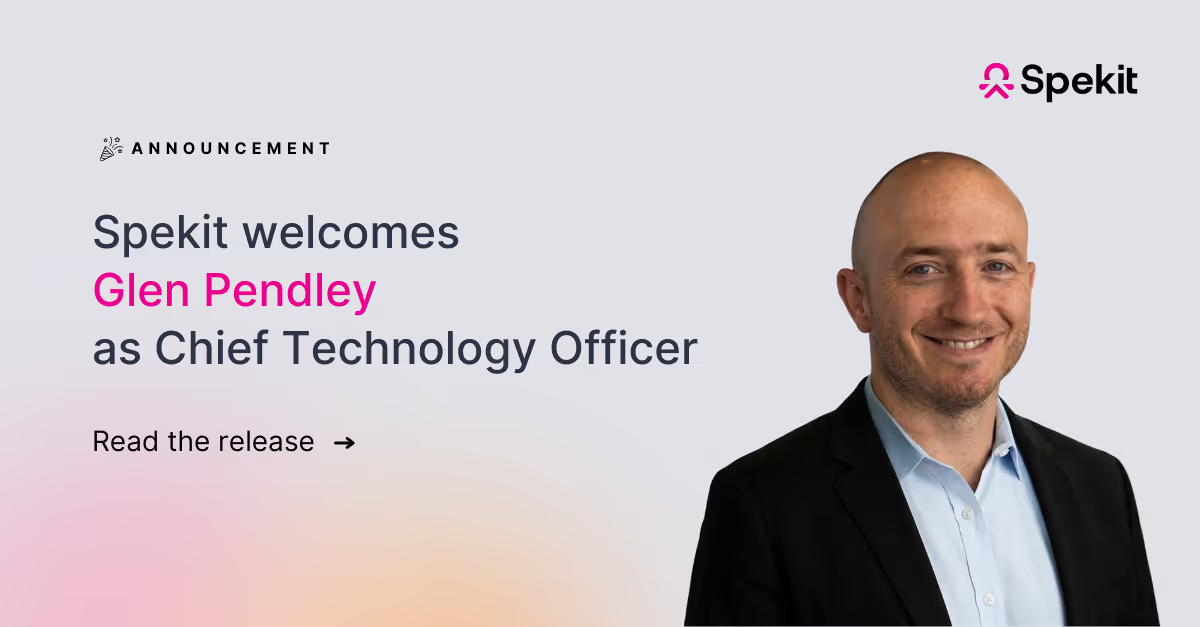
Today, Glen Pendley joins Spekit as Chief Technology Officer. Glen spent more than twenty years building enterprise platforms where accuracy and governance are requirements before anything else ships. At Tenable, he joined early and grew the R&D organization to more than 1,000 engineers through the company's IPO. At Securify, he built the network security platform that led to McAfee's acquisition of the company. He started his career in the United States Marine Corps.
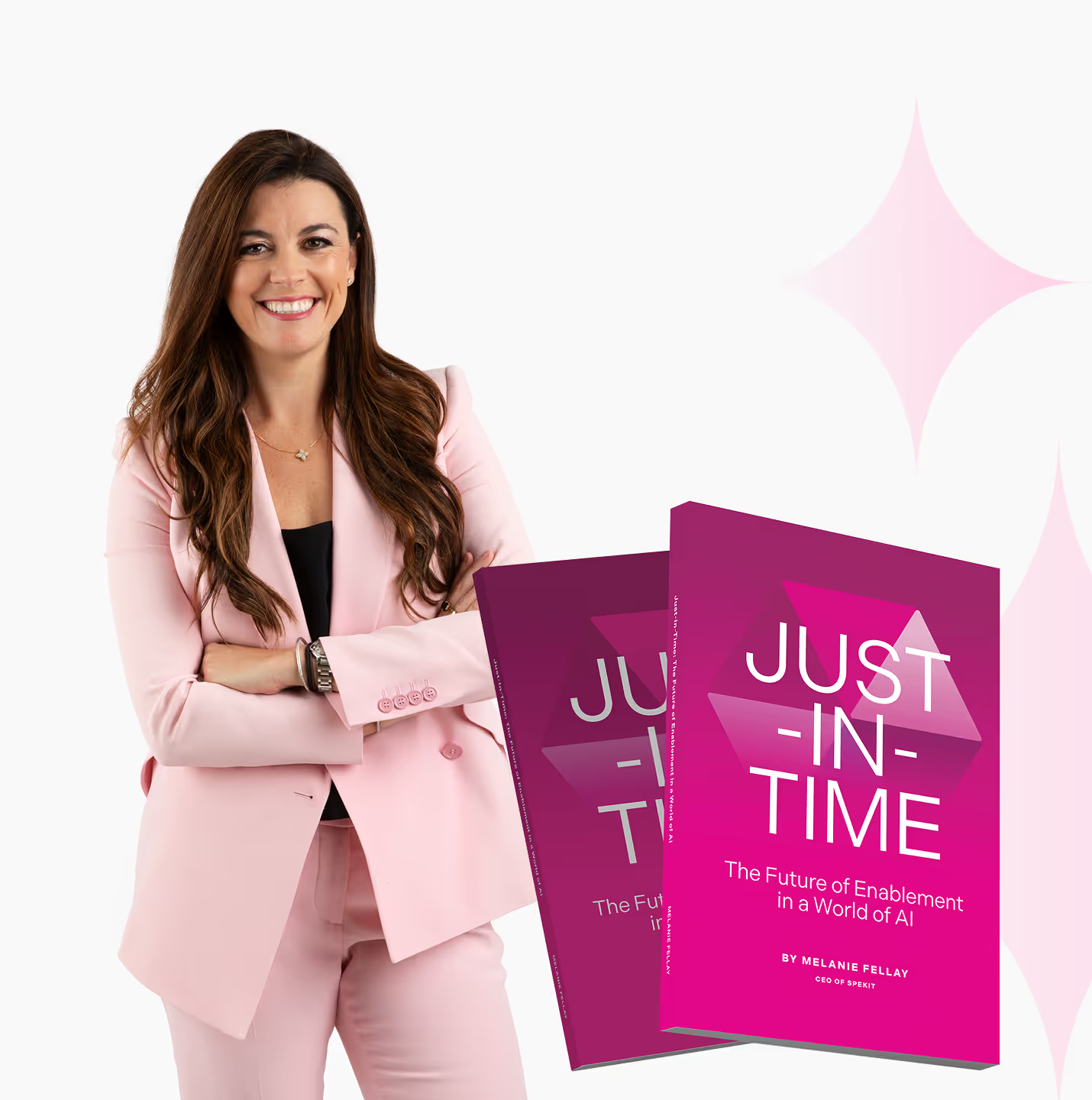
"Revenue teams are trusting AI with their most sensitive go-to-market knowledge, competitive data, and deal context, and most platforms weren't built with that responsibility in mind," said Melanie Fellay, founder and CEO of Spekit. "Glen spent more than two decades in cybersecurity, where everything you ship has to be accurate, trusted, and secure. That's the standard Spekit has to meet, and he has the background we need to lead engineering and product as we scale into the next generation of AI-native revenue enablement."
The phase most companies are stuck on
The 0-to-1 phase of AI requires talent: A sharp prompt, a compelling demo, and executive buy-in. Most companies have gotten good at that part.
The 1-to-100 phase requires something different: A governed knowledge infrastructure that makes AI trustworthy enough to run a go-to-market operation on, reusable workflows that reps rely on instead of workarounds, and outputs grounded in your actual positioning, rather than whatever the model scraped from a two-year-old SharePoint folder.
Revenue teams are already trusting AI with their most sensitive go-to-market knowledge, competitive data, and deal context. Most platforms weren’t built with that responsibility in mind. Glen has spent his career building exactly the kind of infrastructure that earns that trust.
Why the old architecture can't get there
Legacy enablement platforms were built on portal-first architectures: Complex folder hierarchies, search-and-filter discovery, and content that’s difficult to update, access, and maintain.
Seismic and Highspot were both founded in 2011. They helped define the category, and now they're merging, following the same consolidation pattern as Clari-Salesloft, Totango-Catalyst, and Bigtincan-Showpad.
The energy required to integrate two mature platforms at this scale is substantial, and history suggests it diverts focus from the R&D that drives innovation. When Seismic acquired Lessonly in 2021 to enter the LMS space, the platforms still required separate logins more than two years later. True architectural unification of two mature codebases is a different problem than an integration layer.
These platforms are now trying to layer AI onto those portal-first foundations, but the problem is structural. AI layered on top of a content library is guessing at answers from whatever it can find. It doesn't distinguish between approved competitive positioning and a pricing sheet that should have been retired last year. The moment a rep clicks through to the source file, the tracking and intelligence stop.
Horizontal AI copilots took a different approach: Connect to everything and let users search across all enterprise systems using natural language. In practice, these tools surface whatever exists across SharePoint, Confluence, Slack, and your CRM without governing any of it. They have no awareness of the deal a rep is working on and no ability to distinguish current messaging from outdated messaging.
Both approaches stall at the 0-to-1 phase. They can surface information and generate responses, but the governing knowledge infrastructure that makes AI reliable enough to operate is missing.
The architecture Glen is scaling
Spekit's Rep Acceleration Platform closes that gap with an AI-native architecture that assembles deal context from a company's CRM, call recordings, and email activity, then pairs it with a governed knowledge engine of curated, up-to-date GTM content. From that foundation, it delivers contextual coaching, recommended actions, and personalized buyer experiences where reps are selling. The result is reps who ramp up faster, execute more consistently, and spend their time on the work that actually moves deals forward.
For revenue leaders, Spekit connects rep activity and buyer engagement to outcomes: which actions move deals forward, where execution breaks down, and which coaching moments actually stick.
Glen's focus will be on scaling the platform's ability to build richer context from every system in a rep's workflow, strengthening the real-time coaching experience, and connecting rep activity directly to revenue outcomes through deeper analytics.
Why now
The enablement category is undergoing a generational shift. Legacy platforms are consolidating around architectures designed for a different era, with the two largest incumbents now set to merge under PE ownership. Horizontal copilots are proving insufficient for the governance and depth that revenue teams require. And Gartner is recognizing the shift, naming Spekit a Visionary in its first-ever Magic Quadrant for Revenue Enablement Platforms.
Revenue leaders have spent two years piecing together AI tools that don't share a knowledge layer, don't understand deal context, and can't tell a rep whether the positioning they're using is still current. Spekit solves this, and we’re thrilled to have Glen help us extend what’s possible. If you're ready to see what a 10x rep looks like, we'd love to talk.