



Spekit CEO & Co-founder, Melanie Fellay, learned the power of context long before Spekit existed.
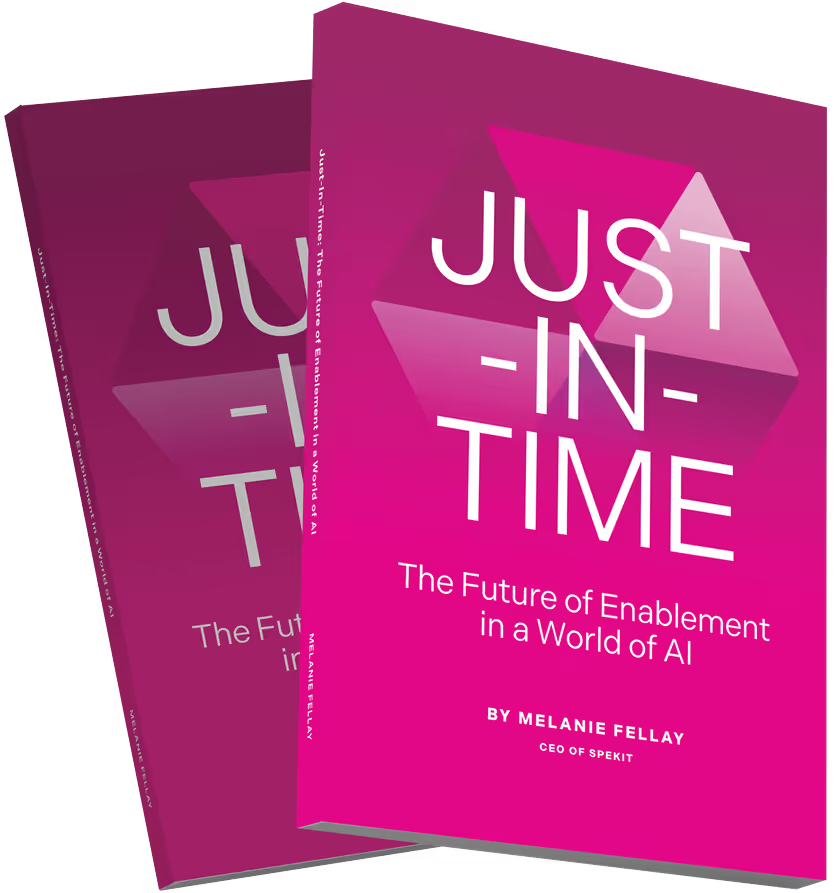
In her book, Just-in-Time: The Future of Enablement in a World of AI, she tells a story from her time as a business statistics recitation leader at the University of Colorado. One student struggled with probability. The formulas stayed abstract. Then Mel asked what he cared about. He talked about roulette. They rebuilt the lesson around odds at a roulette table, and the concept clicked. The same information landed differently because it arrived inside a real moment.
That story is the most useful frame for 2026 revenue enablement.
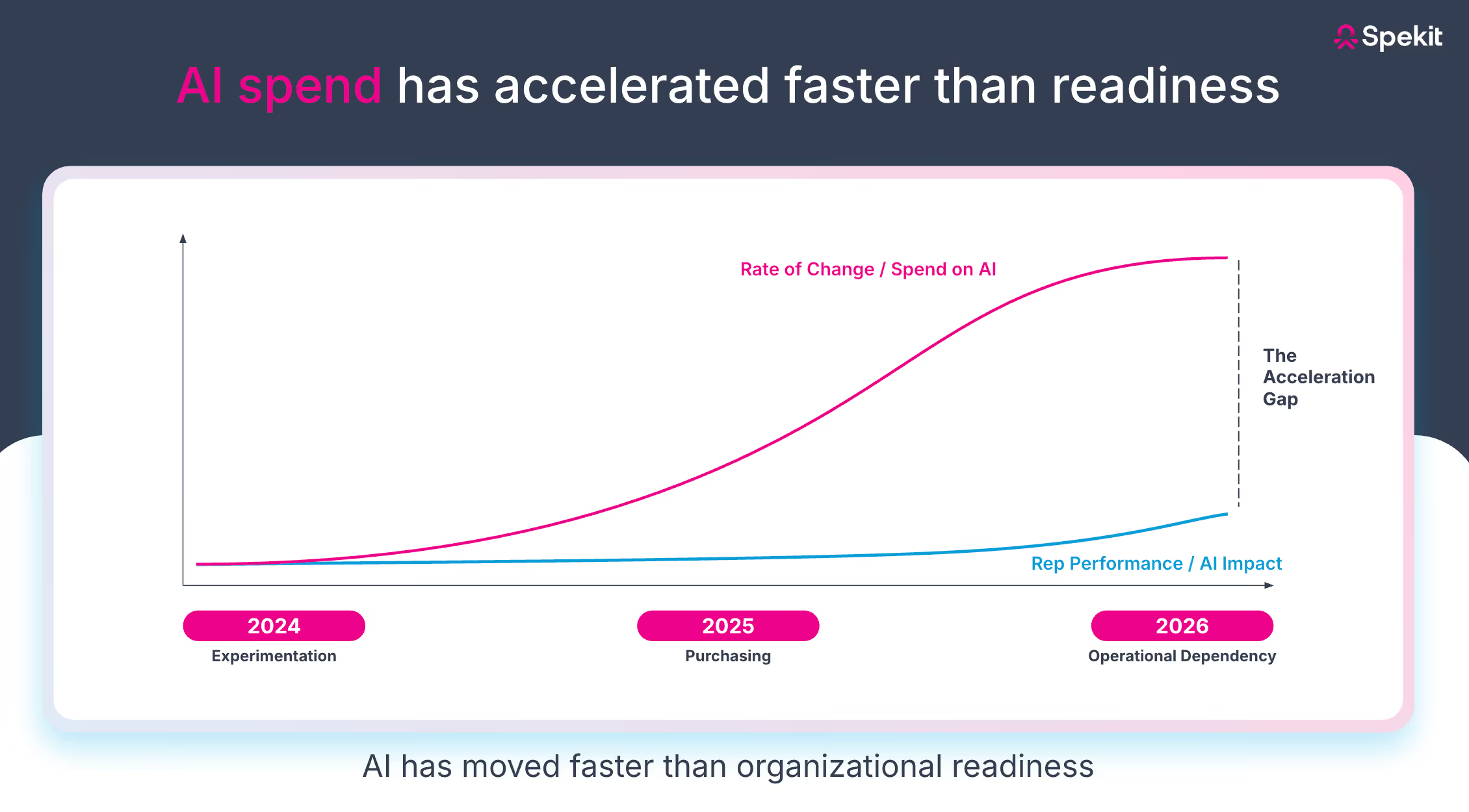
AI has become a board-level priority. Teams have experimented. Teams have purchased. Now AI is entering day-to-day operations. The investment curve has moved fast but the rep outcomes have moved slowly.
In a recent webinar, Mel grounded this market reality with data.
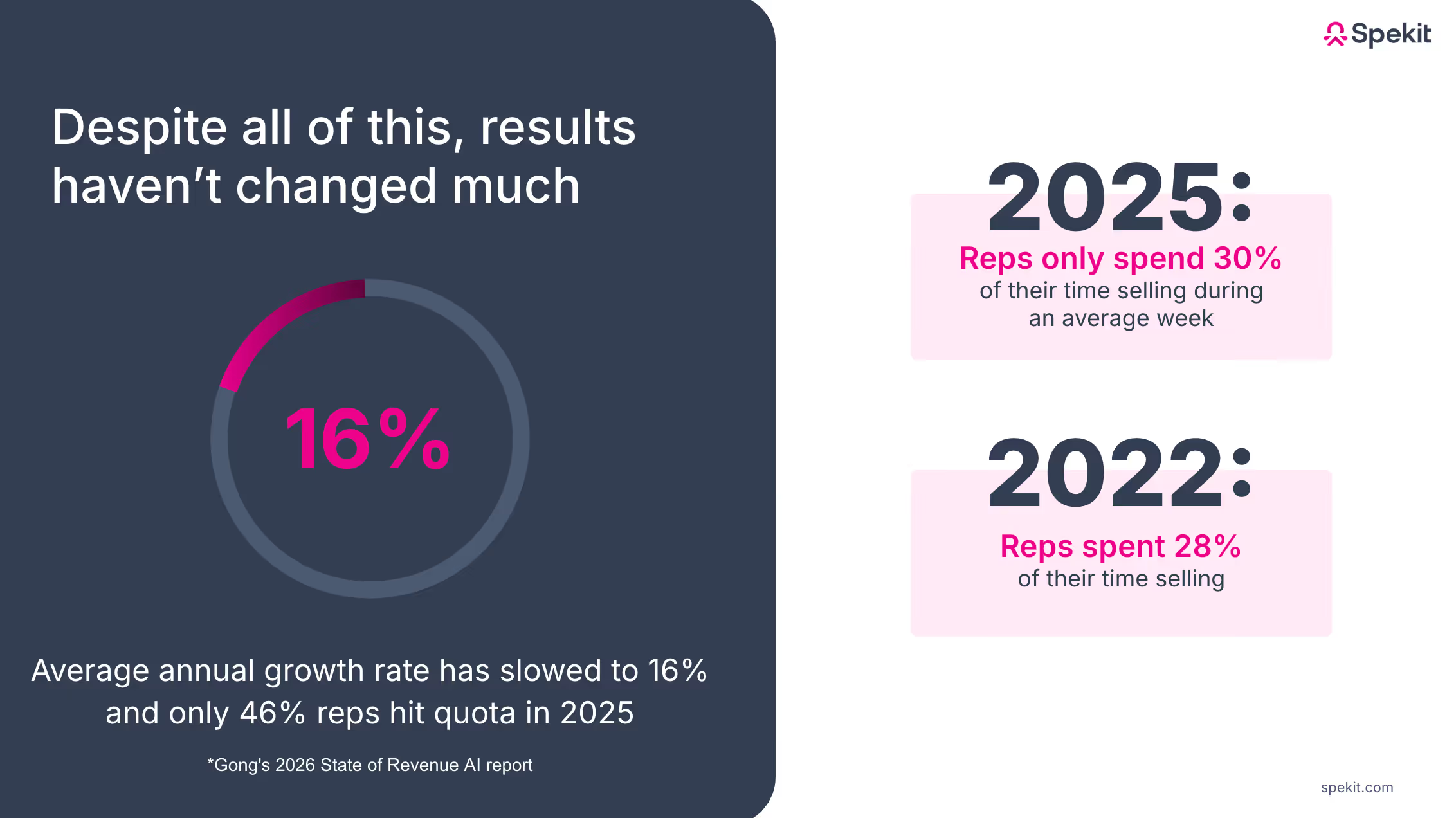
Gong’s 2026 State of Revenue AI report, based on 3,900 companies, showed average annual growth slowing to 16%, with 46% of reps hitting quota in 2025. Salesforce’s research showed reps spent 28% of their week selling in 2022, and 30% in 2025.
That's a lot of change for a two-point movement in selling time.
This is what we at Spekit refer to as the "readiness gap."
AI spend has moved faster than organizational readiness, and rep quota attainment has remained largely unchanged. So, the question for 2026 becomes: where does readiness come from?
The solution to this may sound simple but can be really difficult to execute.
Readiness comes from infrastructure that makes strong rep behavior easy to repeat.
- It means the right answer shows up in the flow of work.
- It means that answer is current and approved.
- It means the answer matches the deal context.
- It means leaders can see whether guidance changed behavior and outcomes.
From that lens, the four trends Melanie shared are less like predictions and more like design requirements for modern enablement.
Trend 1: The build vs buy math changes when AI becomes operational
Mel came up through RevOps. She was a Salesforce admin who liked building. She also learned why scaling internal builds carries an ongoing cost that rarely shows up in the first demo.
In the webinar she described the moment teams hit: the first agent feels exciting. The tenth agent changes the ongoing management workload.
“You build the first agent. Before you know it, you’re managing prompts across a ton of different agents. You’re managing different contexts. That maintenance load is bigger than most teams plan for.”
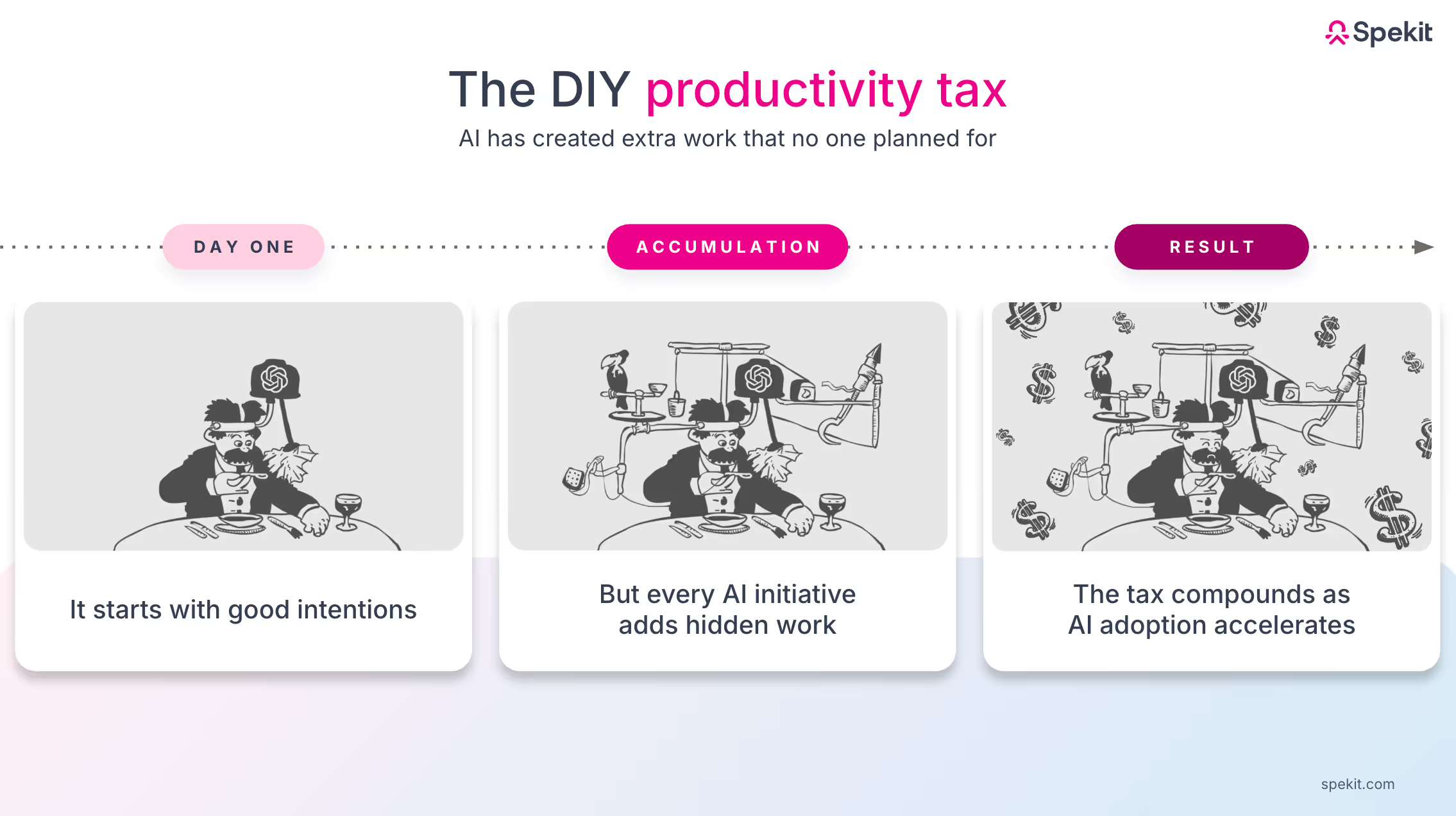
She calls this the “DIY productivity tax.”
It shows up as repeat work that teams didn't plan to staff for:
- Process design that keeps returning with every change
- Prompts and context that require upkeep
- Rollouts and re-training tied to every update
- QA and governance work to prevent drift
- Rework when outputs miss the mark
This is why 2026 pushes more teams toward buying for GTM workflows, paired with a general AI tool used across the company. It's not a philosophical shift. It's an operating shift.
When teams buy for GTM use cases, they look for three things immediately:
- Ready-to-use actions tied to common rep moments
- Deal context handling designed for GTM use cases
- Use-case analytics built in, so leaders can see what changed and what it influenced
Mel’s point is that readiness declines when maintenance grows faster than capacity.
Trend 2: The trust problem forces structure, and GTM knowledge graphs become infrastructure
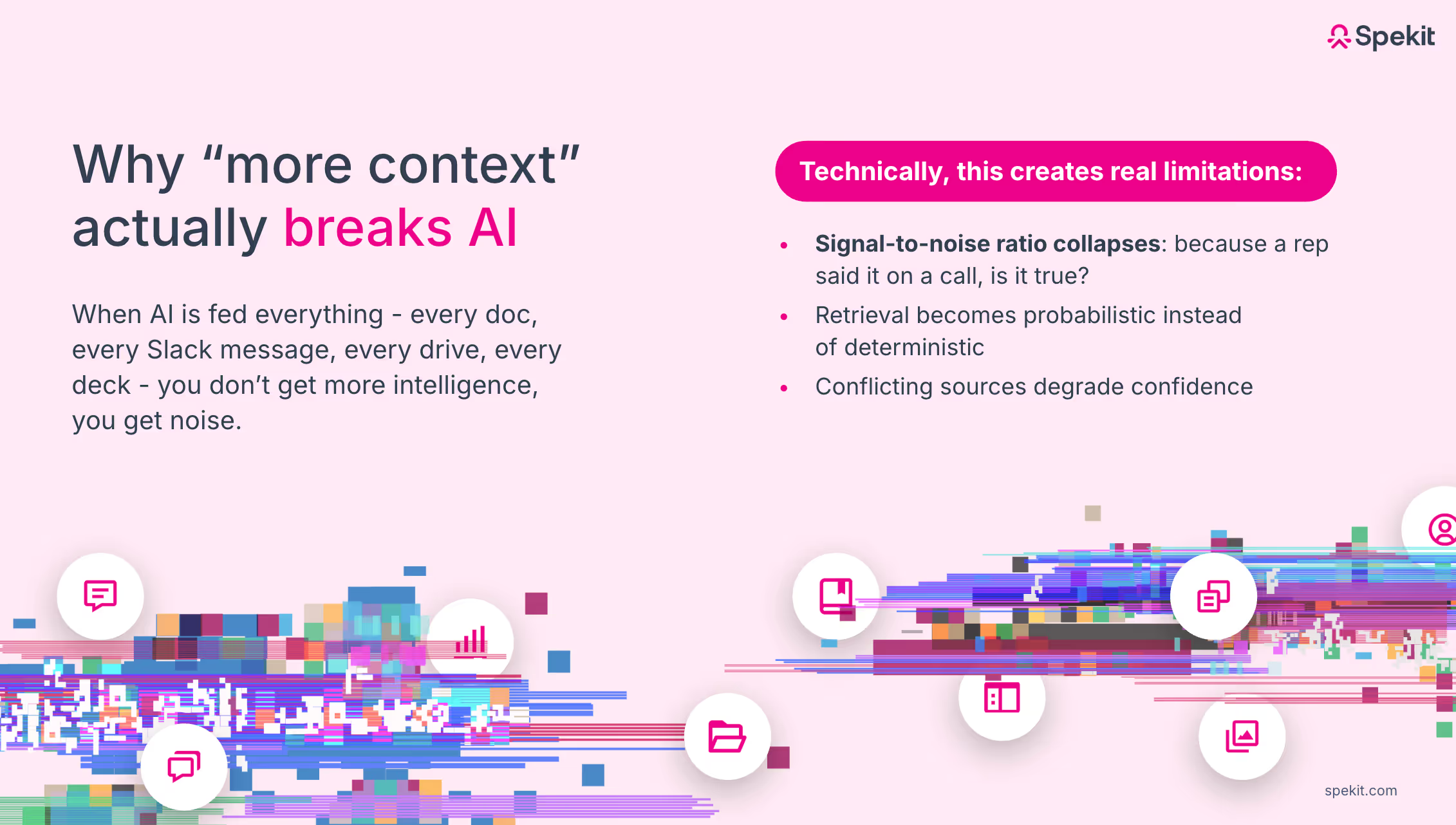
Every AI initiative runs into the same constraint: context.
The reflex is understandable. Connect everything. Index everything. Search everything.
Mel challenged that reflex in the webinar with a reminder:
“LLMs can make the wrong answer look right.”
She then explained why. A sentence can exist in a doc, a call, or a Slack message. Existence does not equal truth. AI systems often return what seems most likely from the available sources.
Confidence drops when those sources conflict, and the output reads polished even when the underlying resource is outdated, unapproved, or incomplete.
“Something can exist and still not be true.”
This is why the 2026 move is codifying “rules of the road” for the sales motion.
Mel's analogy during the webinar was that stop signs work because rules are visible and consistent. Go-to-market needs the same clarity. The sales motion has to be defined in a way a system can follow.
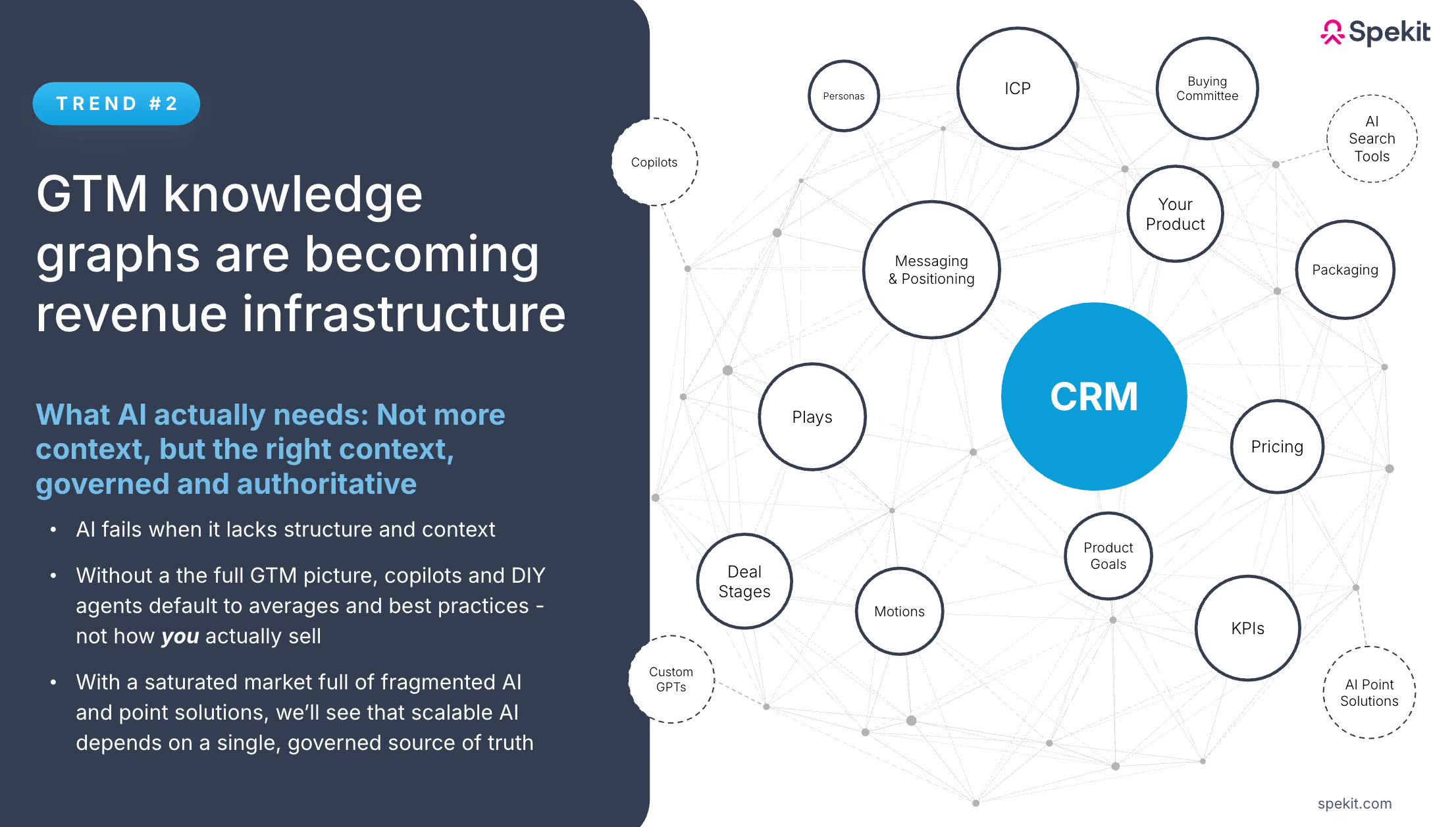
The most practical starting point is already in the stack: the CRM data model.
Stages, fields, products, competitors, and required steps represent how the team sells in practice. When those structures connect to approved knowledge and plays, the organization gains a governed backbone for context. That's what Mel refers to as a GTM knowledge graph, and it's becoming revenue infrastructure.
Trend 3: The future of content requires a reasoning layer
Enablement teams have spent years building libraries of content.
These content repositories help but they also shift the burden of decision-making onto the rep at the moment they have the least time.
Mel's point in the webinar is that accuracy alone no longer solves the problem. Reps need the asset that moves the buyer forward personalized to the whatever deal they're working.
“Content accuracy is table stakes. The harder question is: which asset moves this buyer forward right now.”
She gave a practical example. A team can have ten accurate case studies. A rep needs the one that persuades this buyer, at this stage, with this competitor, with this objection pattern.
There are dozens of factors reps carry in their heads:
- Deal stage
- Buyer persona
- Industry
- Competitor in the deal
- Objections raised
- Rep motion
- The task at hand (prep, follow-up, pitch, objection handling)
- Historical performance of similar assets
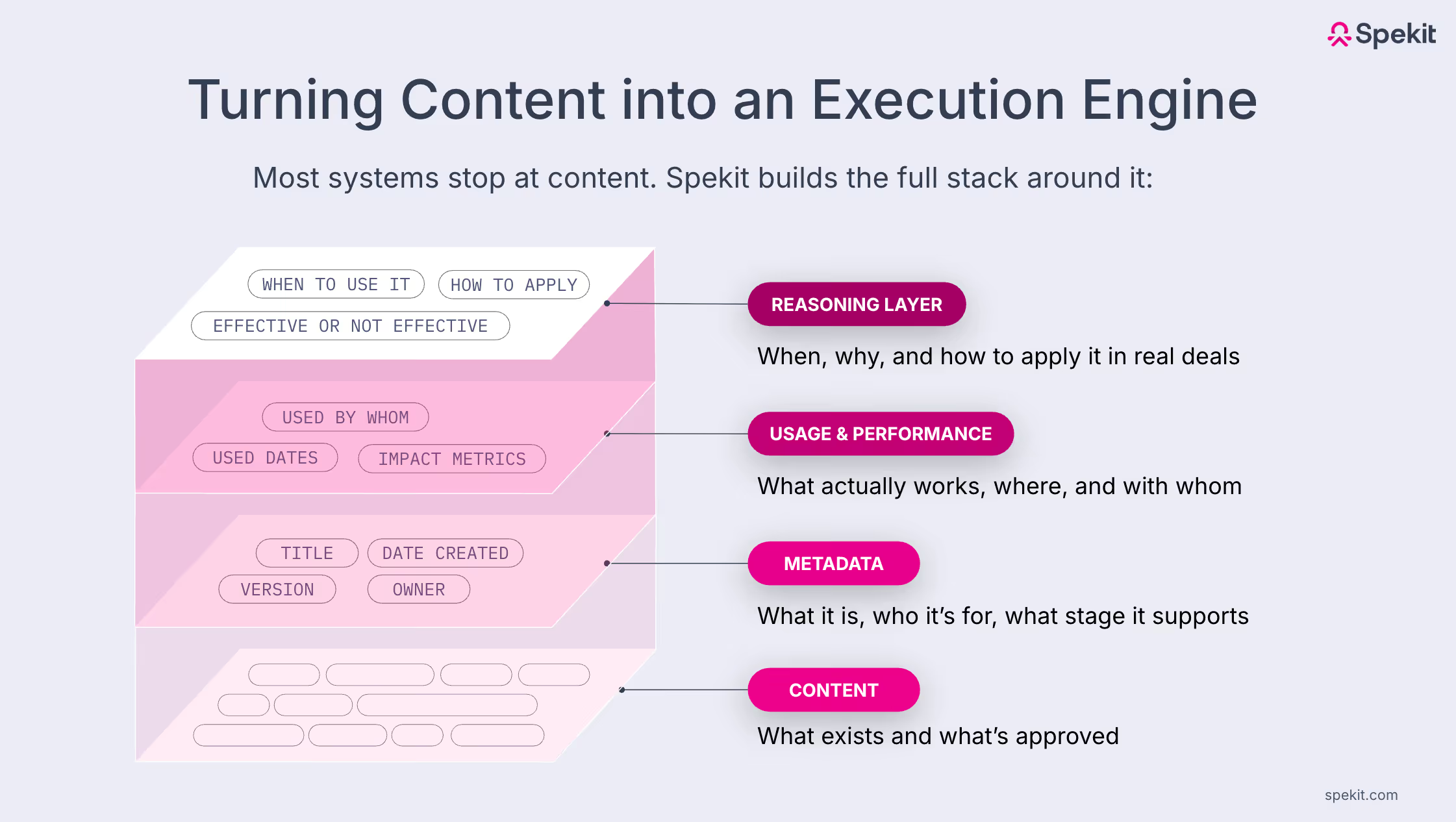
The next evolution of these factors are the “content reasoning layer.” It includes information around the asset:
- Who it was created for
- How it performs
- Where it works
- How current it is
- When it gets used
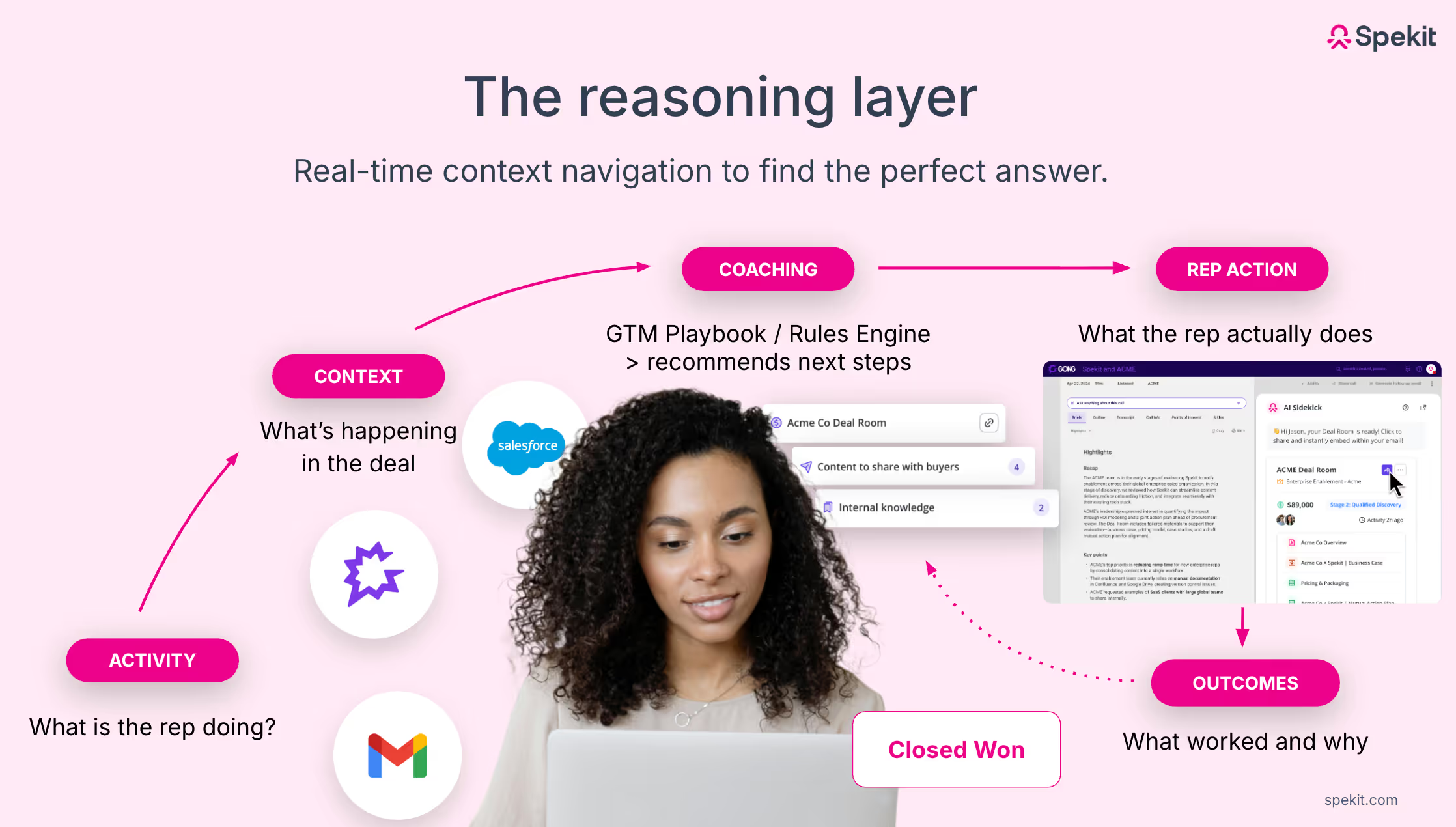
Then GTM teams need an intelligent loop that turns content into execution:
- What the rep is doing
- What is happening in the deal
- What should happen next, based on the rules of the road
- What the rep does
- What worked, and why
Measurement closes the loop. Leaders can see if recommendations led to action, and if action led to deal movement.
Trend 4: Content creation becoming a window into real deal context
Mel described content creation as a window into context because creation moments reveal intent.
Reps create follow-ups, business cases, exec summaries, deal rooms, and mutual action plans. Those pieces of the sales cycle reflect what the buyer cared about, what the rep is trying to do next, and where the deal is stuck.
This is already happening with modern revenue enablement solutions like Spekit today. For example:
A rep finishes a call and needs to follow up quickly with relevant buyer-facing material.
Spekit AI Sidekick surfaces the deal room, the latest call context, next steps, and a short list of relevant assets directly where the rep is already working.
Then it goes even further.
It pulls the latest call recording from Gong, a relevant battlecard, and automatically generates an exec summary template.
They then ask their AI Sidekick to draft a business case based on what happened in the call.
The output reflects buyer concerns that show up in real deals: ramp time, content discovery issues, deal execution challenges, and outcomes leaders care about.
This is the shift. The work reps already do becomes structured context, and that context guides the next best action in the flow of work.
From there, measurement matters again. The analytics view in Spekit shows which resources influence pipeline and closed won, plus buyer engagement signals from shared content. Enablement leaders finally get a clean line from guidance to rep action to buyer response.
Where Spekit wants this story to change
This webinar and Melanie’s book share one consistent belief.
Learning sticks when it shows up at the moment it is needed, tied to a real task, in a real system reps already use. That's what the roulette story illustrates. It's also what the readiness gap demands.
Readiness becomes real when:
- Reps get current, approved answers inside the work they are doing
- Sellers get guidance that matches the deal context
- Leaders can measure behavior change and outcomes
- The organization reduces the maintenance load that drains capacity
One practical step you can take today
Pick one deal stage that creates the most confusion, usually late-stage evaluation or competitive.
Then run a 60-minute “truth and usage” sweep with enablement, RevOps, and two top reps:
- List the top 15 assets reps use in that stage.
- Assign one approved source per topic (pricing, security, competitor, case study).
- Tag each asset with stage, persona, competitor, and last review date.
- Pull the last 30 days of usage and buyer engagement for those assets.
- Update or retire the bottom five that create confusion.
This instantly improves rep behavior quickly because it reduces the time spent searching and second-guessing.
Watch the full webinar
To learn more about what's coming further down the road in 2026 and how you can prepare, watch the full webinar here.