





.svg)
.svg)



Content Templates
Getting Started with Salesforce Pardot Template
This template will provide the basic knowledge, strategies, and common best practices for starting with Salesforce Pardot.
Salesforce Pardot provides a centralized platform for managing marketing initiatives and tracking prospects' interactions across various channels. With Pardot, marketers can customize their efforts and create targeted engagements to meet their company's needs.
The Salesforce Pardot Lightning app integrates all key marketing automation features within the Salesforce platform, eliminating the need to switch between systems.
Pardot helps move your leads through a sales funnel. The progression of leads through a sales funnel starts with visitor engagement with your marketing materials designed to generate interest in your products and concludes with qualified prospects being handed over to a sales representative.
Here, we’ll define the funnel stages plus a few other marketing automation terms.
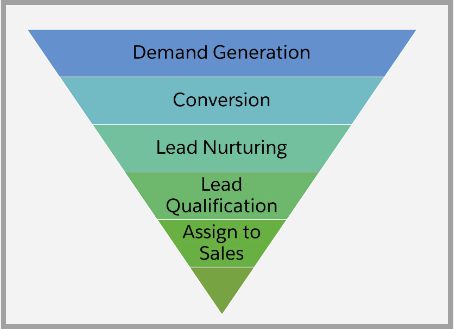
Lead Generation: Creating interest in your products or services through marketing efforts.
Visitor: An anonymous individual who visits your website and is tracked in Pardot.
Conversion: When a visitor provides their contact information, such as an email address, by submitting a Pardot landing page or form, they become a prospect.
Prospect: An anonymous visitor who has converted and is now identified, with a corresponding record in Pardot, similar to a lead record in other CRMs like Sales Cloud.
Lead Nurturing: Sending targeted messages to prospects based on their actions and qualifying criteria, at specific intervals.
Lead Qualification: Determining when a prospect meets the criteria for being assigned to a salesperson for further follow-up.
Pardot uses two metrics for lead qualification: Score and Grade.
By utilizing scores and grades, you can identify prospects who are ready to move to the end of the sales funnel for follow-up by a salesperson. Pardot automation allows for swift assignment of qualified prospects to the relevant sales team member.
Campaigns play a vital role in assessing the performance of your marketing initiatives by tracking marketing ROI in Pardot and Salesforce.
In Pardot, campaigns serve various purposes. For example, each prospect is associated with a campaign that indicates the first marketing-related contact they had with your company.
Additionally, campaigns allow you to organize related marketing materials.
Most importantly, campaigns enable you to track all marketing touchpoints in a prospect's journey, leading to improved ROI reporting capabilities.