



Key takeaway: Sales playbook adoption is how consistently reps follow your sales playbook in real opportunities. The playbook itself includes the sales process, the plays for each selling situation, and the knowledge, rules and approved content reps need to sell. Adoption is often low because many organizations roll the playbook out through training and then leave it outside the tools reps work in. The best way to improve sales playbook adoption is a unified, governed knowledge system that delivers and reinforces every play and every change inside the tools reps already use. Solutions like Spekit®, an AI-first revenue enablement platform, keep your playbook in one governed content library and deliver it as Enablement in the Flow of Work® to reps and AI assistants.
A sales playbook is the documented guidance reps follow to sell. It includes the sales process and its stage criteria, and the plays for each selling situation, such as discovery, a competitive deal or a renewal. It also includes product and tool knowledge, and the rules for how reps document deals, fill CRM fields and use each system. Approved content, such as battle cards, email templates and talk tracks, is part of the playbook too. Guidelines, such as pricing and discount rules, complete the playbook. Customer success, partner and support playbooks often face the same adoption problem.
What is sales playbook adoption?
Sales playbook adoption is the degree to which reps follow the playbook in their day-to-day selling, and keep following it after each change. It is measured by behavior in real opportunities, not just by views or training completion. Views and completions show whether reps have seen the material. Adoption means their behavior changed: reps run the right play for the situation, follow the current process, and fill fields the way the playbook asks. When a play changes, adoption also means reps switch to the new version instead of the one they learned at launch.
What are the common reasons reps don't use your sales playbook?
Low adoption usually comes from how the playbook is delivered, and from how changes reach reps after launch. In many organizations the playbook is rolled out as a separate phase. Reps train, sometimes certify, and return to their deals while the playbook stays in a document or a portal. Training and certification do their job at launch, but the situations they prepare reps for can arrive days, weeks or months later. By then the memory of the training has faded. If guidance is not provided where reps act, make decisions and follow the playbook, they improvise and use out-of-date or incorrect guidance.
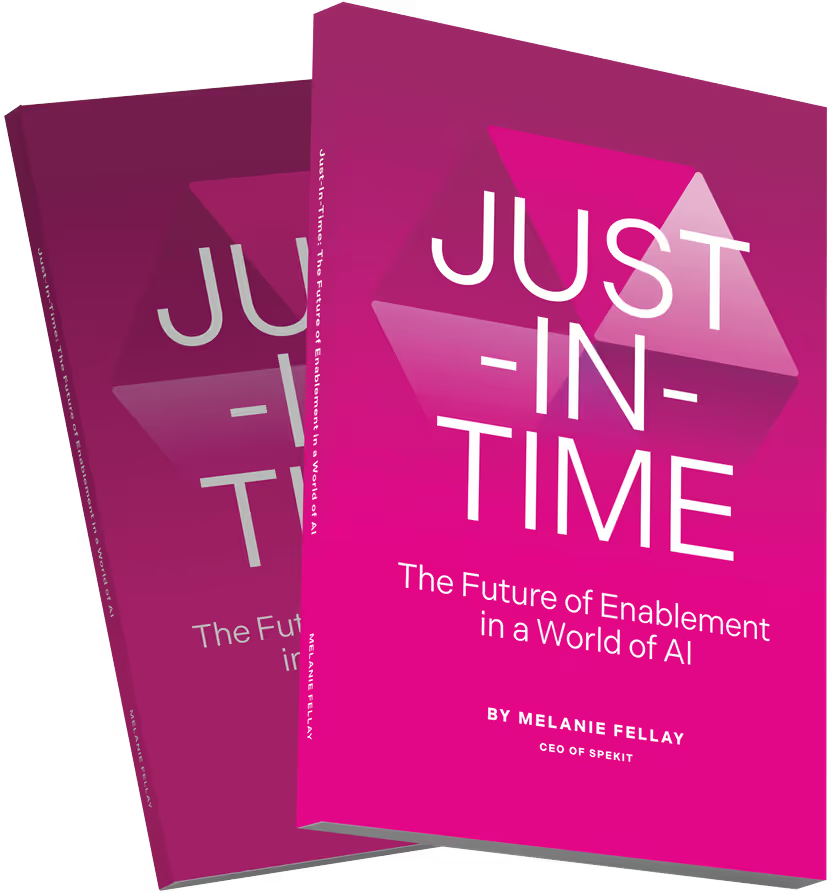
Often the playbook keeps changing after launch. In Just-in-Time: The Future of Enablement in a World of AI, Spekit CEO Melanie Fellay calls the small, frequent changes micro-changes: minor process updates, new fields and revised battle cards. They come up constantly. Each one gets an email, a Slack message or nothing. "We're obsessed with launching changes, not enabling them," she writes. Even when the change is communicated, the documentation rarely gets updated. Reps who rely on the original documentation may now follow incorrect guidance. Teams therefore face two challenges. The first is getting reps to use the playbook at all. The second is getting them to follow the new, accurate process as the playbook adapts and changes, rather than the original documentation or the training they took.
| Cause | What goes wrong | What fixes it |
|---|---|---|
| The rollout is a one-time training event | What goes wrongReps forget the play before the situation comes up | What fixes itReinforce each play at the moment of use, and again over time |
| The playbook sits outside the tools reps use | What goes wrongFollowing the playbook means leaving those tools, so reps skip it | What fixes itDeliver guidance in the CRM, email and the other tools reps use |
| Changes after launch are announced once or not at all | What goes wrongReps keep working the old way | What fixes itExplain each change where it applies and show what changed |
| Reps can't find the answer fast enough | What goes wrongReps improvise or use an old copy | What fixes itMake plays findable in the tools reps use, and show them proactively before reps ask |
| The playbook is one long document for every situation | What goes wrongReps can't act on it in a live deal | What fixes itCreate micro content and micro training for each specific selling situation |
| The content is out of date | What goes wrongReps stop trusting it | What fixes itKeep content current with AI grounded in your governed knowledge, in a system where one change propagates everywhere the content is used |
| The CRM asks for different stages and fields than the playbook teaches | What goes wrongReps follow the CRM | What fixes itAlign the CRM's stages and fields with the playbook, and embed guidance directly on each stage and field |
| Managers don't reinforce it | What goes wrongReps treat it as optional | What fixes itCoach and review deals against the plays, and review whether reps access the content and complete knowledge checks |
| Success is measured by completion alone | What goes wrongLeaders think the playbook is adopted when it is not | What fixes itMeasure behavior in real opportunities, as well as access and completion |
How do you get reps to use your sales playbook?
- Find out whether the playbook goes unused and why, using usage and search data from an enablement platform if one is in place. Without that data, ask reps what they use instead, listen to calls and shadow a few reps. A small team can ask every rep. A large one samples reps and compares findings across regions and segments.
- Define the behaviors that count as adoption. Then assign responsibilities. An executive sponsor sets the expectation and reviews adoption with sales leaders. Enablement maintains the plays. RevOps keeps the CRM aligned with the playbook. Managers review how reps apply the plays in their deals.
- Write the plays with a group of reps, starting from what top performers do. Keep each play short.
- Deliver the play inside the CRM record, email and the call tool. Without a platform, CRM field help text can hold a definition and a link to the play.
- Align stage definitions and required fields with the playbook's criteria, so the CRM asks for what the playbook teaches.
- Reinforce through managers who coach to the plays in deal reviews, and through short spaced checks.
- Give AI assistants the same approved plays, or their answers come from whatever they can reach.
How do you roll out a sales playbook change without classroom training?
Large changes, such as a new methodology or a CRM migration, may deserve live training. Carefully consider the scope and size of the change and the amount of enablement required. In the book Just-in-Time, Melanie writes that enablement effort should match the size of the change. In her T-shirt sizing, a new CRM field gets quick, lightweight communication and reinforcement. A new methodology gets workshops, structured learning and just-in-time reinforcement.
Smaller changes, and the follow-up to large ones, should reach reps at the moment of use. An alert on the changed page tells reps what is different. Guidance on an updated field or picklist tells them which value to pick. For a new tool, in-app training reinforces the live session at first use. Each placement shows the difference rather than the whole playbook. As Melanie writes, "The delta is what matters." She also recommends making documentation updates a required step of every release. A short knowledge check then confirms that reps understood the change.
How do you measure sales playbook adoption?
You measure sales playbook adoption in two ways: through analytics on how reps access the playbook, and through the behavior change you see in their deals. Access analytics show whether reps open the plays, what they search for and whether they complete the knowledge checks. Behavior change shows whether reps follow the plays in real opportunities.
Review a sample of calls and opportunities against the agreed behaviors, and compare the share that follows the plays with the share before the rollout. Searches that return no answer show where to write a missing play or make an existing one easier to find. Before anyone writes new content for a play with low use, check whether the selling situation occurred, whether reps could find the play and whether it fit the deal. Knowledge check results show where reps need reinforcement. Plays used, searches and knowledge checks are leading indicators. Stage conversion and win rate move months later.
What is the best way to improve sales playbook adoption?
The best way to improve sales playbook adoption is to build the playbook on a unified, governed knowledge system. It should be centralized, so each play has one current source. A change is then made once and propagates everywhere the play is used, so reps see the current version. It should be AI-powered, to help reps find answers fast and teams draft and update plays from existing content. It should have strong analytics, so leaders know which changes need reinforcement and which plays to fix or retire. And it should deliver each play and each change in the flow of work, so reps use the playbook instead of improvising.
Spekit is a great example of a platform like this.
How does Spekit help reps use your sales playbook?
Spekit is an AI-first revenue enablement platform. It keeps your playbook in one governed content library, the GTM Knowledge Engine, and delivers each play as Enablement in the Flow of Work® inside the tools reps use and the AI assistants they ask. It addresses both challenges: getting reps to use the playbook, and keeping them on the current version as the playbook changes.
In Spekit, a team makes each change to the playbook once. Content in Spekit is stored as Speks, units of governed content that define the information in the system. A Spek can be a play, a process step or a training module, and it can be nested inside a playbook Spek or a Learning Path. Because content is reused instead of copied, updating a Spek updates it wherever it is nested or reused. Copies pasted into emails or exported files do not update.
Spekit shows each play where reps act and decide. Embedded Speks attach definitions and criteria to Salesforce fields, picklist values and stage transitions. A Spotlight announces a process change inside the app where reps work. Guidance can also be mapped to any web app. For example, training for Gong appears when reps open Gong.
Finding the right play takes no manual setup, because Spekit indexes every Spek and synced file with AI. AI Sidekick brings knowledge directly into reps' flow of work, with answers and recommended content in the tab they are in. Reps ask questions, draft messages and find approved content without leaving that tab. Spekit MCP delivers all of that knowledge, its answers, and brand guidance to any LLM a team wants to use. Assistants such as Claude, ChatGPT, Copilot, and Glean then answer from the same plays reps use.
Each Spek has an owner and version history. The Governance Dashboard shows which plays are stale or unused. The AI Content Builder drafts new plays for review from existing Speks and Gong call transcripts. Owners can also use the builder to update existing plays from new source material.
Learning Paths built from the same Speks reinforce the plays after onboarding, in Salesforce, Gmail, Gong and LinkedIn. Short Knowledge Checks show who understood a change. Analytics show which reps have reviewed updated messaging. Managers then see where a change has not landed and whom to coach. Leaders also see which content correlates with closed-won deals in Salesforce and decide which plays deserve more investment.
Learn how Spekit keeps sales playbooks where the plays happen.